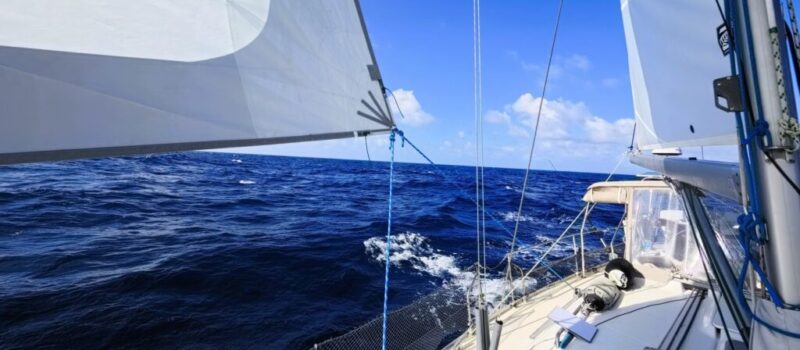
Pacific Crossing

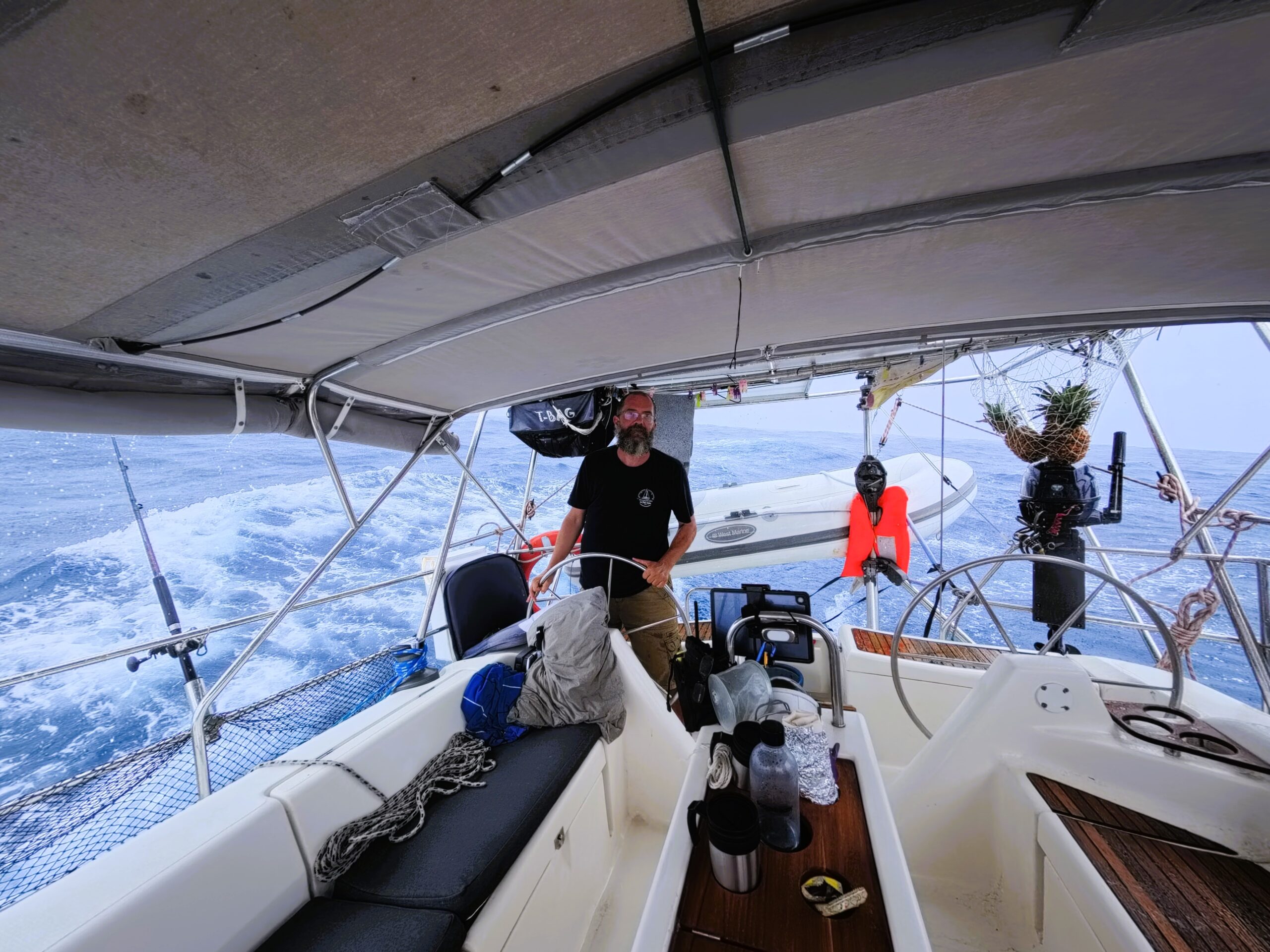
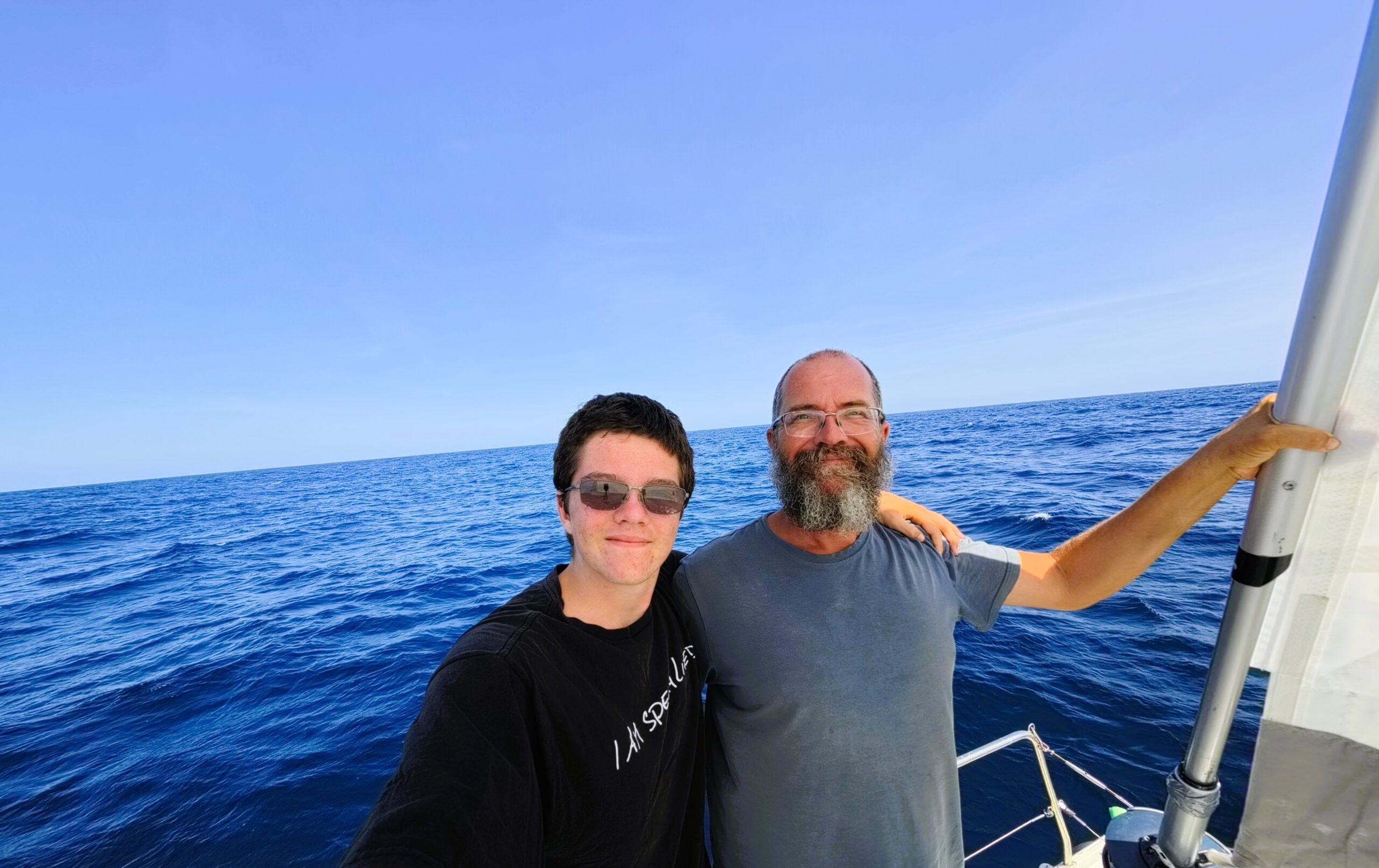
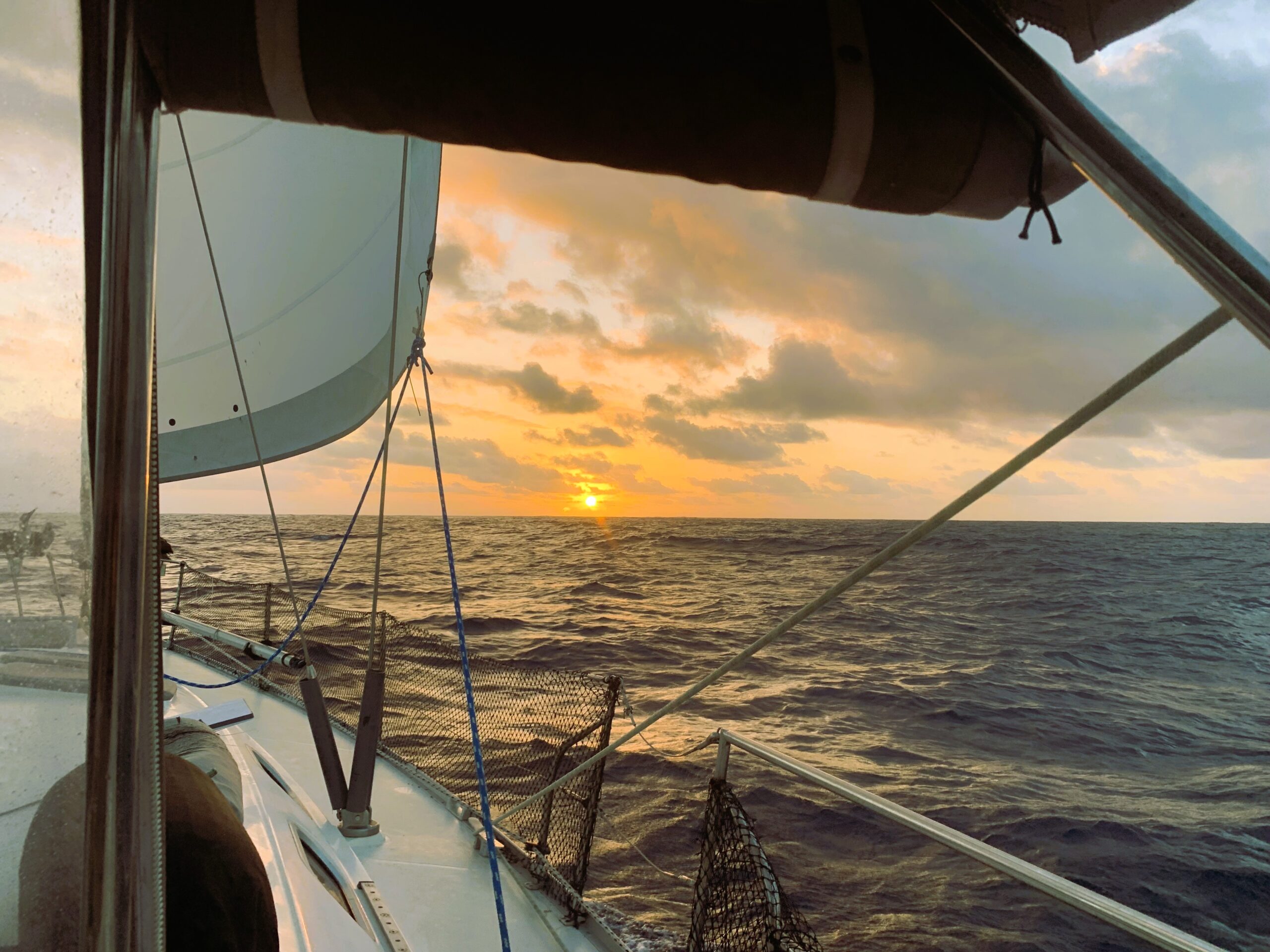
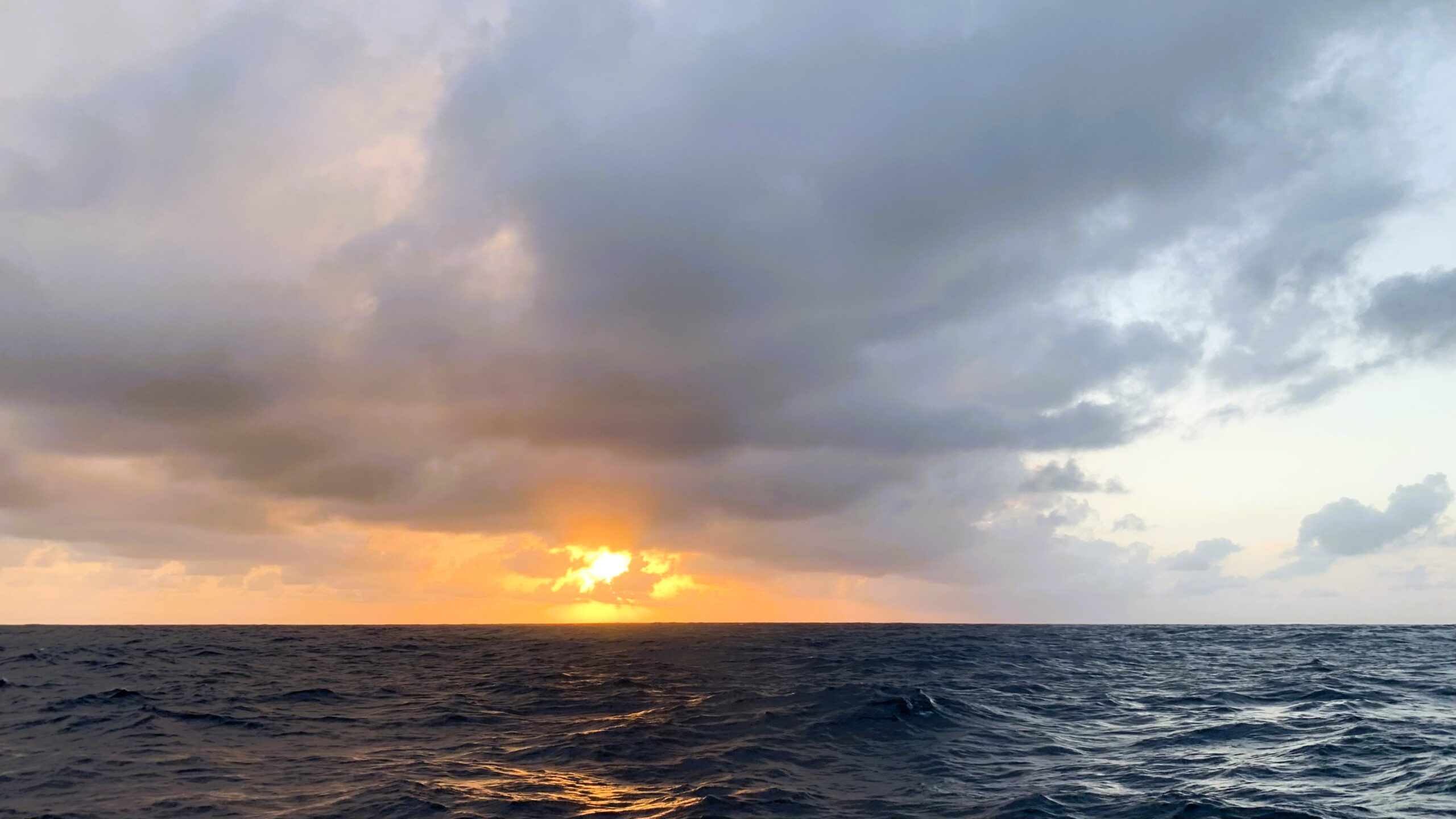
After about four months of preparing the boat at the Vista Mar marina in Panama, we began our Pacific crossing around 5:00 PM. Our first attempt a month earlier had ended with a forced return to the marina after our mainsail tore. After 32 days at sea, we reached the Marquesas Islands. This crossing went smoothly this time, with excellent weather conditions. Crossing the equator and the sunsets will remain among my most cherished memories; my only regret is not having experienced that feeling of isolation in the vastness of the ocean.
In figures:
– 4,200 nautical miles covered
– 77 engine hours
– 5 days with moderate rain
– 34.6 knots maximum wind speed recorded
– 1 fish caught (released)
– 500 liters of fresh water consumed
– 250 GB of offshore internet
– 4,500 Ah of autopilot saved thanks to the hydrogenerator
– Zero breakdowns
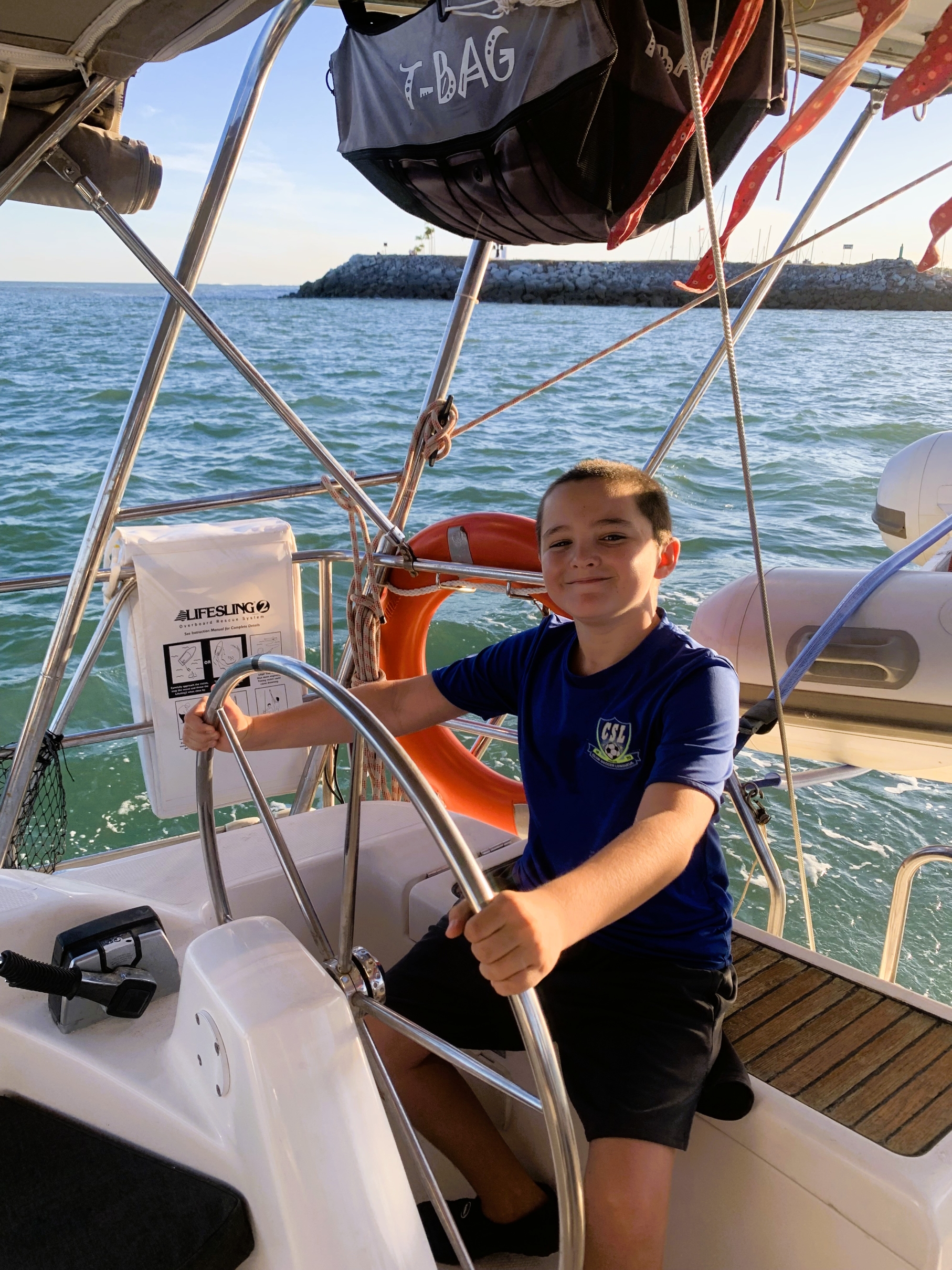
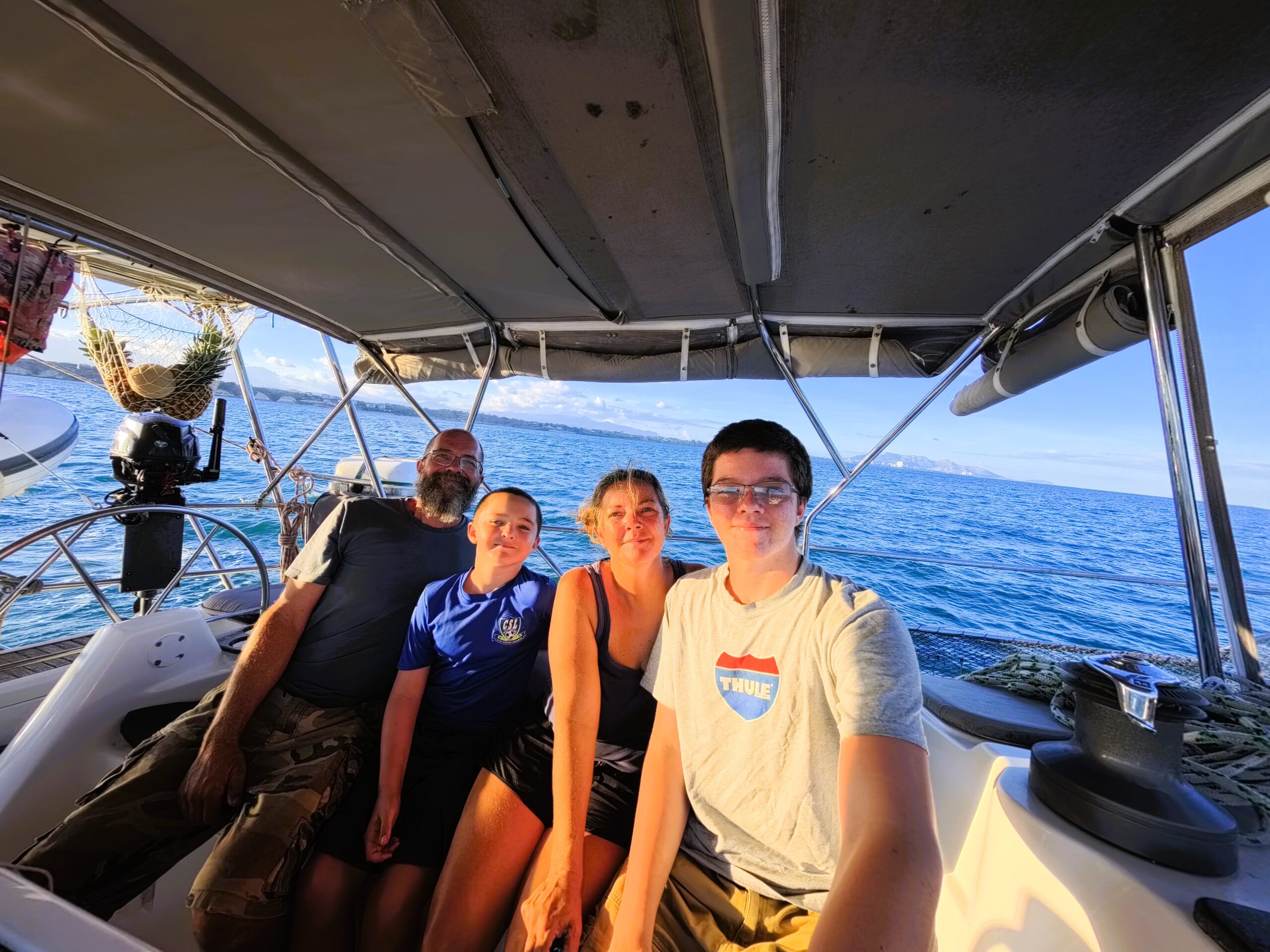
Here are the daily notes taken throughout the trip.
Day 1 – The first night of sailing took place in much more pleasant conditions than during our first attempt. Around 8:00 this morning, we left the shipping lanes behind us. 13 knots of following wind and waves carrying us along—we’re not complaining.
Day 2 – The second night was very calm; the wind and waves have eased a bit. A good current continues to carry us. Our plan is to reach the trade winds south of the Galapagos; we’re planning a few days of motoring to cross the Doldrums.
Day 3 – The wind completely died down last night, and we’re motoring. According to the forecast, the wind should pick up again tomorrow during the day. No wind and no waves, so it’s quite calm. Paul is taking advantage of this to make progress on his school. We haven’t put the fishing rods in the water yet, given that there’s no room in the fridge or freezer, and we’re pretty sure we’ll catch one within the first half hour.
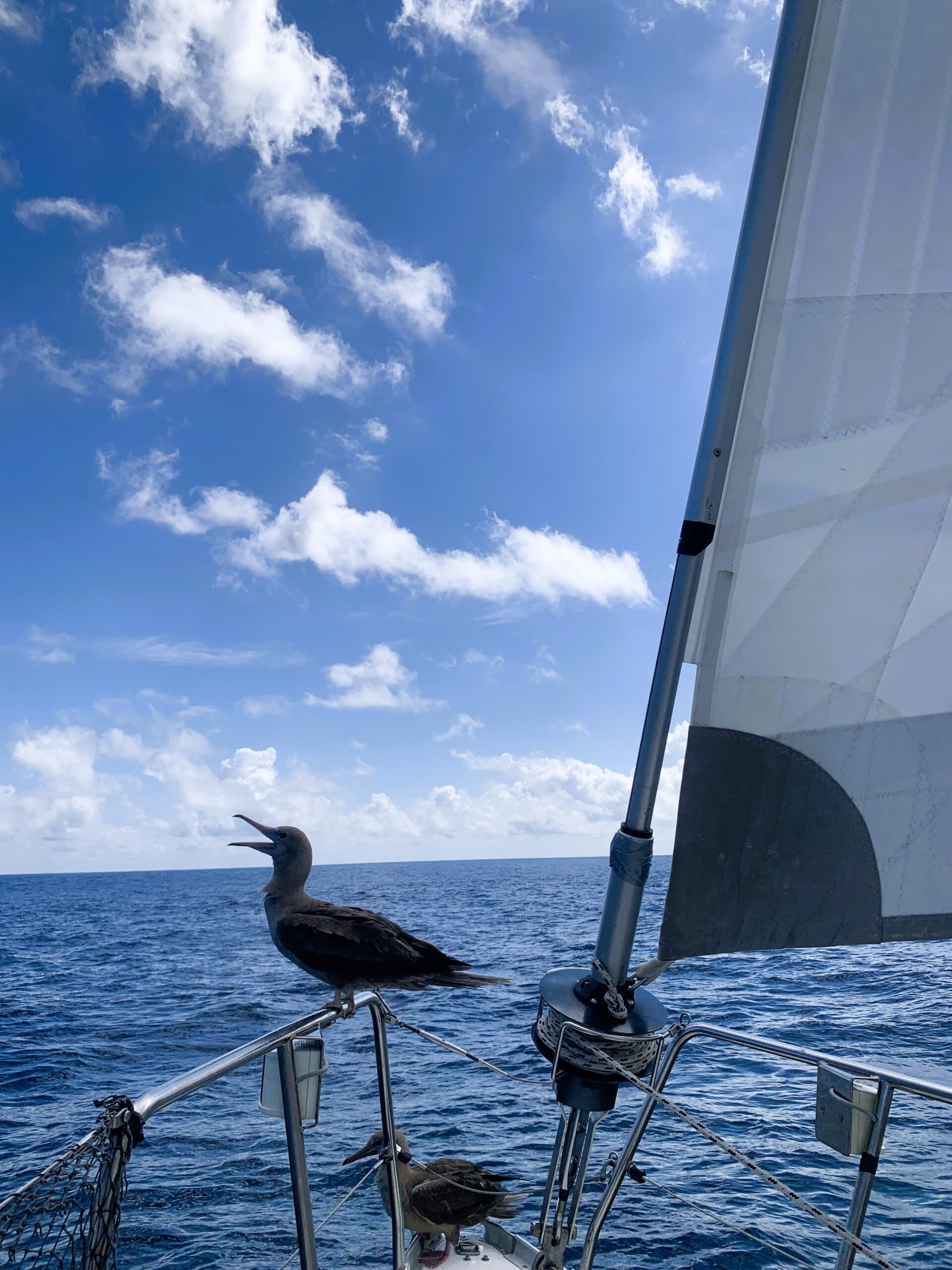
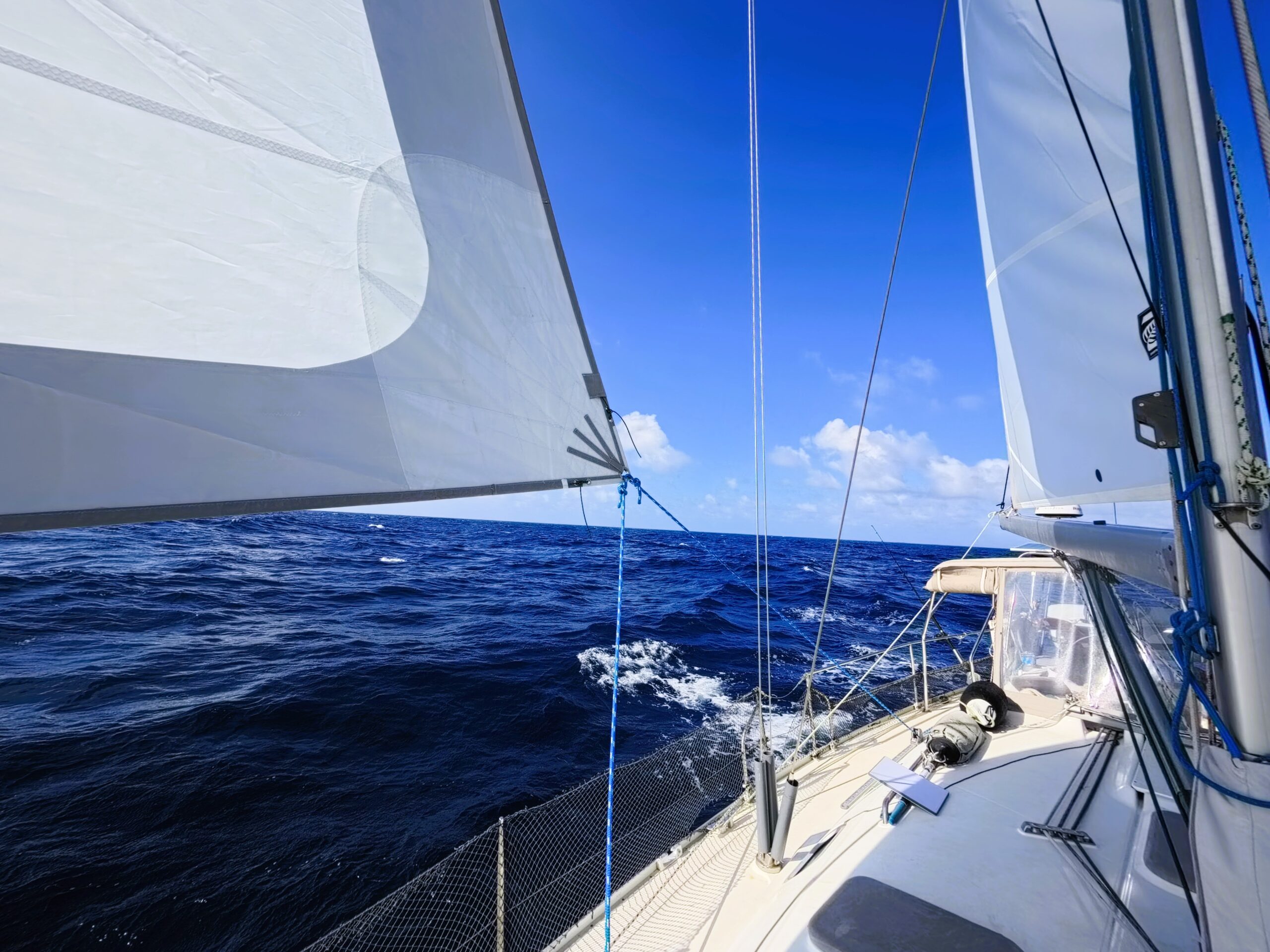
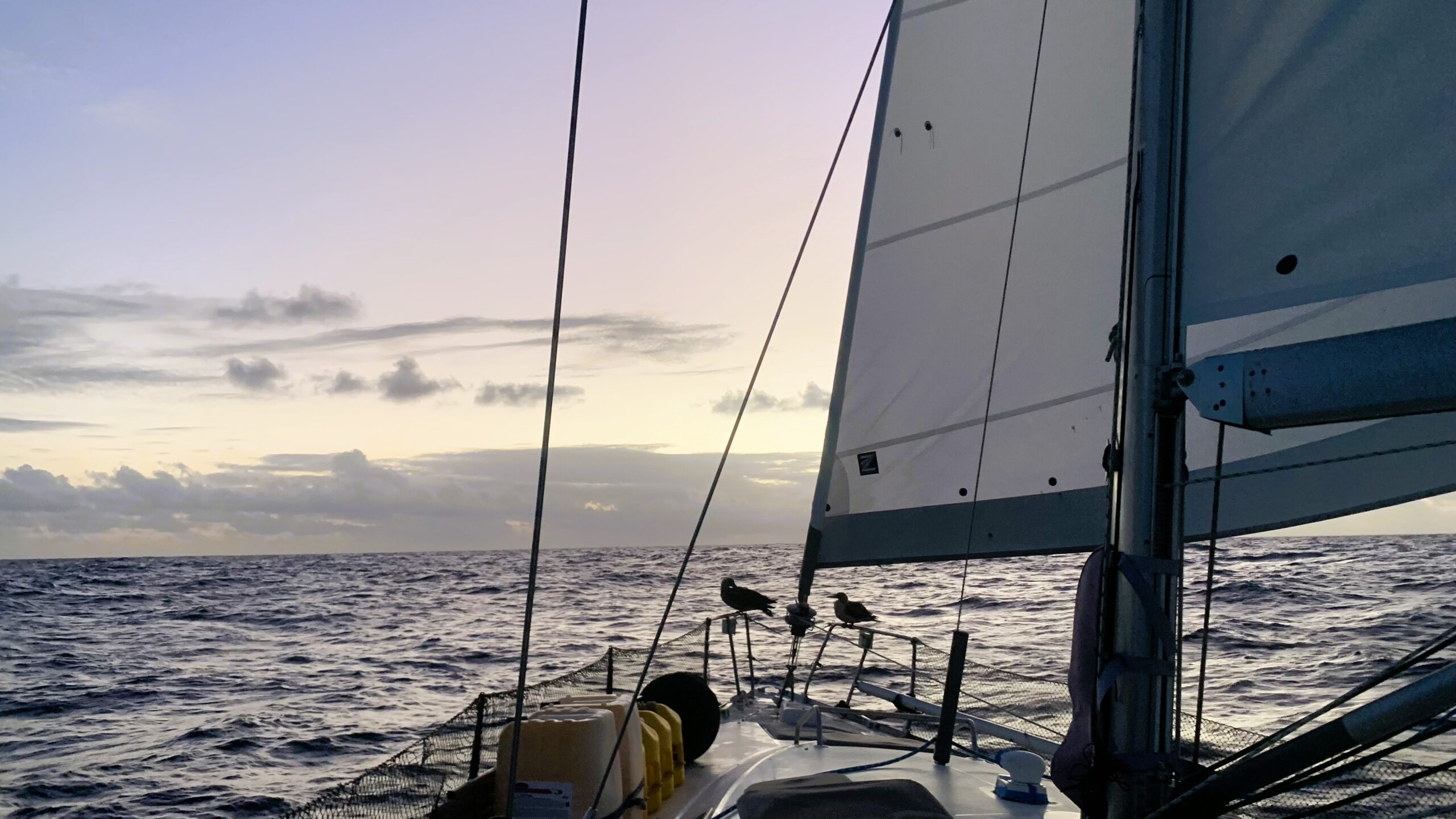
Day 4 – A great day. The wind has returned, with about 9 knots on the beam. Our new Hydrovanne windvane autopilot is working perfectly. Heading 255 degrees, we’re making our way towards the Galapagos, but we may have to head further south to reach the trade winds. The weather is partly cloudy. Last night we saw some lightning but no storm cells. This afternoon it’s birdwatching, with birds trying to land on the boat and wreak havoc on the deck!
Day 5 – Honestly, if every day could be like this until the Marquesas, we wouldn’t complain (even though we’re not the complaining type)! A few cumulus clouds but beautiful sunshine and, most importantly, 8-9 knots of wind on the windward side, even though the forecast hadn’t predicted any. This allows us to make 4 knots, which is perfect because we want to reach the equator tomorrow morning, not during the night. As for the crew, we still have the dozen or so guys perched on the bow; I’m curious to see their faces when they realize we’re not stopping in the Galapagos! This afternoon, Victor prepared the bread to accompany the foie gras tomorrow to celebrate crossing the equator. An unusual occurrence: this morning, a civilian helicopter circled Do The Thing, probably coming from a luxury yacht cruising in the area.
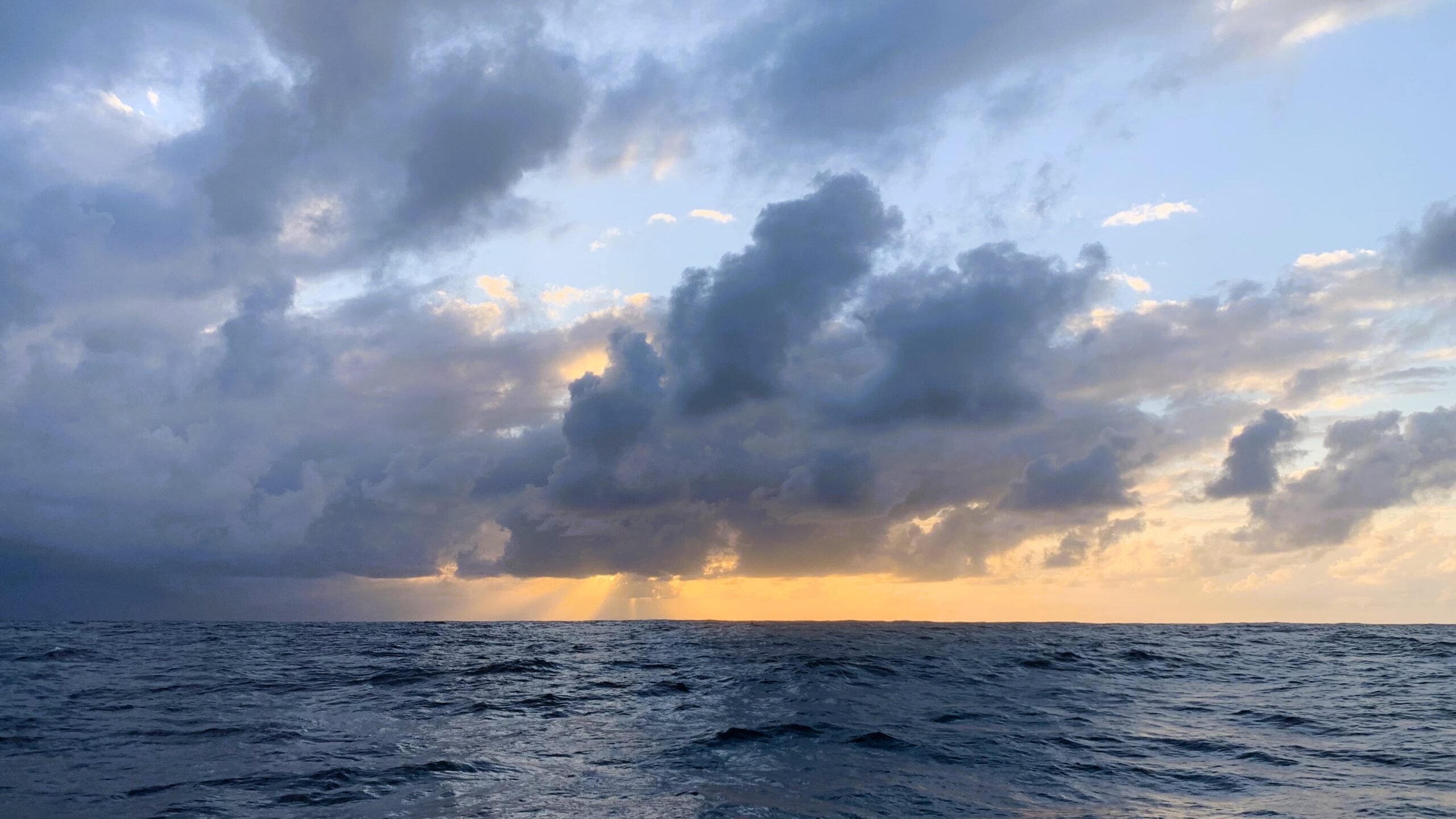
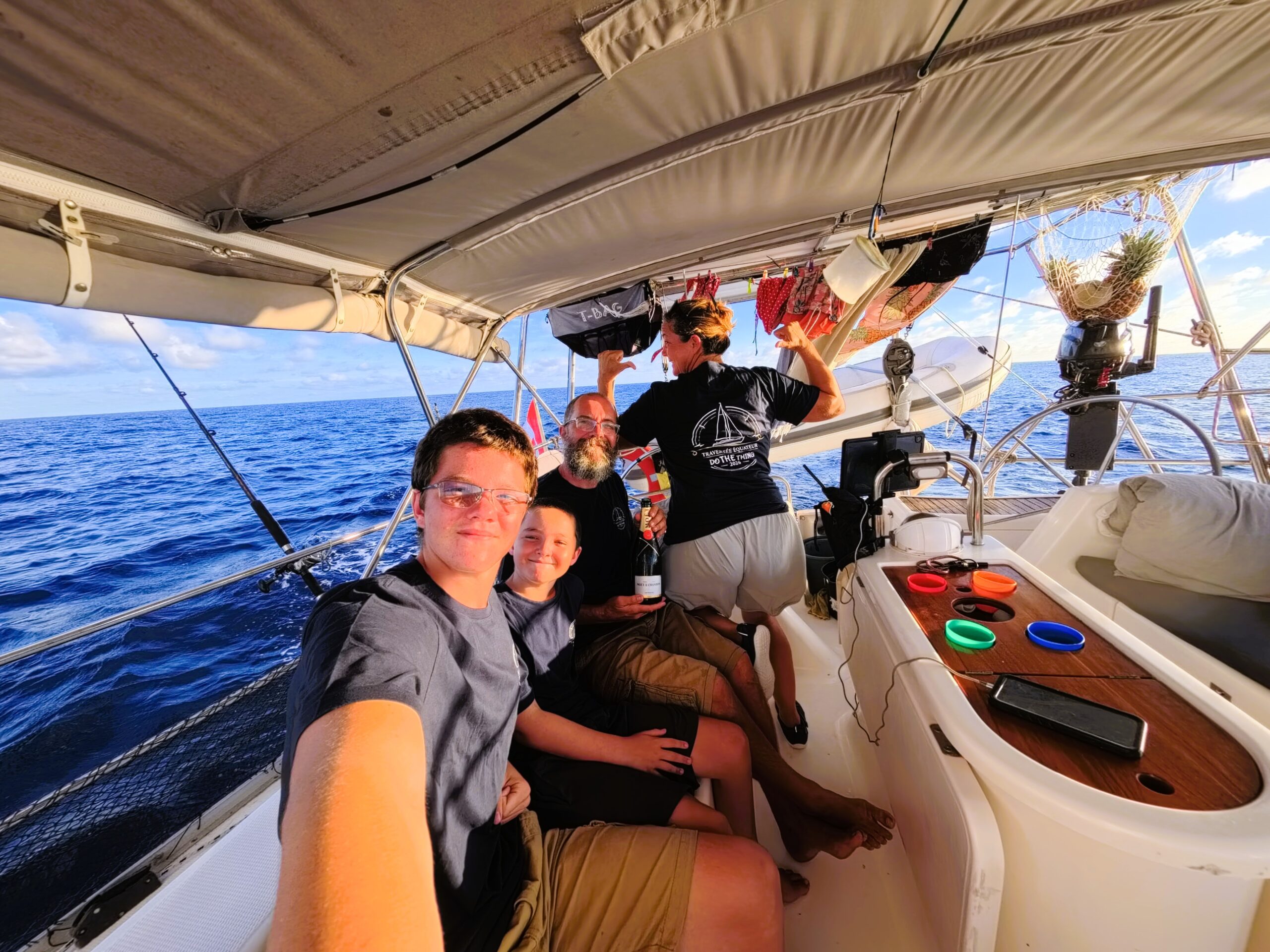
Day 6 – Another beautiful day of sailing, which began with crossing the equator. At 7:52 a.m., we entered the Southern Hemisphere. We were really happy to do it during the day, as we had prepared a small feast to mark the occasion. Marjolaine had special t-shirts made for the event. In the afternoon, we had 16-knot winds on the windward side of the strait, and we wanted to stay as far south as possible to avoid the storm cells near the Galapagos. Let’s hope we escape the rain tonight.
Day 7 – We continued sailing close-hauled through the night in sometimes uncomfortable conditions, but managed to maintain a course as far south as possible to avoid the turbulent areas near the Galapagos. In the morning, we couldn’t escape the rain, the first since our departure a week ago. Around 9:00 AM, the wind dropped completely, forcing us to motor for a few hours. Conditions became excellent again, and we began heading further west. Over the next two days, we should be sailing along the southern coast of the Galapagos and, if all goes well, take advantage of the trade winds all the way to the Marquesas Islands. This evening, we’re taking advantage of the relatively calm swell to have a raclette dinner. PS: Just as I was about to post this, we started to see a change in the clouds in the distance. The radar confirmed the presence of squalls, and we’ll have to go around them by heading north. A stressful moment, but around 9:00 PM, the squalls dissipated, and we resumed our southwest course.
Day 8 – The morning was a continuation of the night, a succession of storm formations that we had to try to navigate around, some more successfully than others! The good news is that the deck is now very clean… I must admit that the radar is a fantastic tool; we installed it in Panama before our departure. Around 2:00 PM this afternoon, we were greeted by a superb blue sky and a steady 16-knot wind on the windward side, allowing us to continue southwest. Our plan is to maintain this course until we reach between 4 and 5 degrees south before bearing west.
Day 9 – We bore west at dawn. The sailing became much more comfortable despite the swell of nearly 2 meters. The sky was clear with only a few small clouds. We imagine (and hope) that a good part of the journey will be in similar conditions. We took advantage of this to rest. According to the routing, we’ve covered 1,100 nautical miles out of the 4,000 we set out to do. We’ll need to keep an eye on the battery charge level tomorrow; after two days without sun, they were at 60% this morning and are charging up to 80% today.
Day 10 – A beautiful day of downwind sailing. Blue skies with a few clouds. Still some swell, but nothing that makes our progress too uncomfortable. We’re heading 280 to stay in the upper reaches of the trade winds and thus avoid the more treacherous conditions further south. I’d like to take this opportunity to thank Fred, who’s keeping an eye on us from Brittany; it’s reassuring. The batteries seem to be working well. We’re limiting our use of the Starlink, which forces us to keep the inverter on (for some reason, it doesn’t seem to be working on its 12V power supply).
Day 11 – The night was one of the calmest since our departure, with practically no swell. A steady 15-knot wind picked up in the morning and carried us west all day. The 2-meter swell is still present, but we’re getting used to it… The next task will be to refill the first water tank we emptied (about 250 liters). Unfortunately, the through-hull fitting for the watermaker’s intake is on the port side, upwind, which means that with each wave it ends up above the waterline, consequently letting air into the system and rendering it inoperative. We’ll therefore wait for calmer seas, and if there’s an emergency, we can always change course to the north for a few hours so that the through-hull fitting is downwind. As for our route, we’ll continue west for a few days to begin our southward journey; this will keep us in a more comfortable area.
Day 12 – A day just like yesterday! Blue skies with a few clouds. A fairly constant wind of 10-14 knots and still a good swell. Our heading remains the same, between 260 and 270 degrees. We took the time to prepare a delicious plate of penne with rosé sauce and grilled sausages. We definitely eat less at sea than on land; admittedly, our physical activity is somewhat limited. As for our route, we’re making good progress, covering about 1,560 nautical miles out of the initial 4,000. The forecast predicts a zone of lighter winds ahead of us on Thursday, which might be a good opportunity to use the watermaker!
Day 13 – Today we’re making steady progress under a beautiful blue sky. The wind has eased a bit; we have a modest 8 knots in the late afternoon, not always enough to keep the sails full, especially with the beam swell. So, we’re taking advantage of the slightly more stable conditions to work on the watermaker. We’ve opted for the solution of putting the primary pump in a large tank that we fill with seawater as needed. It’s like bailing the boat out with a bucket, but from the outside in! Joking aside, everything works perfectly; we’re even able to supply the tank with a hose connected to a through-hull fitting, which avoids the constant stream of buckets of water… In 1 hour and 20 minutes, 80 liters are produced, which is a third of the tank’s capacity. We’ll do it again tomorrow!
Day 14 – At 5:30 PM, it’s been exactly two weeks since we left Panama. In terms of distance, we’re approaching the halfway point. We were expecting a windless day according to yesterday’s weather forecast, but to our great delight, we had a steady 10-knot beam wind with negligible swell. Sailing conditions are excellent; we’re making good progress on a 260-degree course. This afternoon, we passed a cargo ship less than two miles away. The ocean is vast, but still, we hope the wind holds tonight so we can continue onward. Our fresh food supplies are dwindling, but the cupboards and hold are still well-stocked. Tomorrow, we’ve decided to go fishing.
Day 15 – Dead calm. The little wind we had during the night completely died down this morning. We continued southwest, carried by the current. Around 2:00 PM, we started the engine to try and reach a windier area in the early evening. A few dolphins came to play around the boat. We caught our first fish, but unfortunately, it wasn’t worth mentioning… Hoping for some good wind tonight, under the light of the full moon.
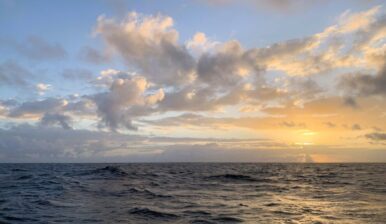
Day 16 – Another day marked by a lack of wind. Around 5:00 AM, we stopped the engine and continued under sail in a meager 5 knots of wind. According to the forecast, the winds were supposed to pick up a little further south in the early afternoon, which unfortunately didn’t happen. So we’re making southwest at a speed of about 5 knots. A short 5-minute shower cleaned the boat in the mid-afternoon; at least it removed the salt from the rigging and sails… Currently between the 6th and 7th parallels, we’d like to quickly shift to a more westerly course.
Day 17 – Yesterday, late in the day, we finally reached the trade wind zone with a steady 14-knot wind gusting to 20. We can now head further west and are making 6 knots, sometimes 7. We’re keeping the sails reefed to avoid being caught out. So far, our speed controller is working perfectly; we’ve hardly used our autopilot since we left, except for the sections under power. The sailing conditions aren’t the most comfortable due to the crosswind swell, but making progress is satisfying… we might as well get used to it, as we can expect it to continue until we reach the Marquesas.
Day 18 – Great day of sailing with a steady 12-14 knot wind and a much calmer swell. We’re maintaining a due west course at the 7th parallel. The weather forecast for the next few days doesn’t look promising; the days should be similar to today. Victor baked us some delicious bread to go with the smoked salmon we’ve been carefully storing in the freezer. Our food supplies are still plentiful.
Day 19 – The rain started very early this morning, before it was even light, and continued until midday. The wind, quite light in the morning, gradually strengthened in the afternoon, settling at around 15 knots. We covered an average of 150 nautical miles per day. In the afternoon, we passed a cargo ship less than 2 miles away; it’s always a treat to see something other than the vast expanse of water and the few birds that have ventured so far out. Victor baked us a delicious upside-down peach cake.
Day 20 – Another magnificent day. We covered about 150 miles in the last 24 hours, carried along by the current. The wind (and the swell) was constant at around 15 knots. We are currently halfway between the Galapagos and the Marquesas Islands, the furthest we’ve reached from any land. We’re trying to maintain a course as far west as possible without going too far south, as the forecast predicts a windless zone in a week as we approach the Marquesas. Life on board is still going well, punctuated by reading Asterix comics.
Day 21 – It’s been exactly three weeks since we left Vista Mar Marina in Panama. To date, we’ve covered approximately 2,740 nautical miles out of a total of 4,000. We’re currently averaging 150 miles per day. Today is very similar to the previous days, although the swell is more pronounced, sometimes reaching 3 meters. Let’s hope for calmer weather tonight. We’re keeping an eye on the weather forecast and the windless patch that could potentially develop further south as we approach the Marquesas Islands. Today, a new bird landed on the bow. It’s different from the ones we’ve had so far and seems to understand when we speak French. We deduce that it must be returning to Polynesia…


Day 22 – It was during the night that we recorded the strongest winds since our departure with gusts of nearly 30 knots. The swell is still intense throughout the day. On the menu today is a good paella, we even have chocolate Saint Michel pancakes with coffee that makes you forget about the rolling… Another day of around 150 miles. We are still monitoring the forecast for Monday/Tuesday to see the extent of the windless zone.
Day 23 – A much calmer day than the day before, the swell has diminished quite a bit. The wind has also weakened and remains around 12 knots. We are still progressing due west and waiting to pass the possible soft zone which should emerge on Monday before targeting the Marquesas. Our plan is to enter Nuku Hiva, in the north of the archipelago.
Day 24 – Beautiful sunny day with a wind of 12 knots on average. The new forecasts ultimately do not predict a soft zone ahead of us but conditions similar to today for next week. There are about 950 miles left to go. It’s another freighter that passes us less than 2 miles away, the third in three weeks, the feeling of solitude and wide open spaces takes a hit. Moreover, when we look at the AIS targets we see that there are hundreds of boats sailing nearby.
Day 25 – Our daily average is decreasing but we are staying the course. About 800 miles to get to Nuku-Hiva. The day was cloudy with rain in the evening, the night should be calm. The day’s fishing campaign having not been a success, we eat gnocchi in tomato sauce for dinner.
Day 26 – The wind picks up slowly today, we maintain a course of 260. The objective is still to enter Nuku-Hiva. In the coming hours we will monitor the groupings of hundreds of fishing boats located approximately 100 miles to the west. At the end of the day we jibe to take a heading of 300 and go higher in order to get around them.
Day 27 – In the early morning we take a southwest heading again and progress in good conditions all day. The weather is cloudy but no rain or storm. Friends on a sailboat 300 miles further southwest than us reported that their previous night was particularly difficult due to storm cells with gusts of 30 knots. About 550 miles before reaching Ua-Huka, a small island located east of Nuku-Hiva, which will be a good anchorage if we arrive during the day.
Day 28 – Four weeks and still no fish in the line! The day was very calm, carried by a tailwind we were moving at around 5 knots. Next night we will again come across a cluster of fishing boats, we will have to remain vigilant. We hope to reach Nuku-Hiva within 3 or 4 days if current conditions persist.
Day 29 – Another calm day with moderate swell and a tailwind of 10 knots, we progress slowly. The weather has been very good so far with only a day or two of thunderstorms since we left Panama. We’ve covered about 120 miles in the last 24 hours, so we expect to arrive Monday if all goes well.
Day 30 – Conditions are similar to yesterday, a little rain in the morning then beautiful blue skies the rest of the day. Still 12-13 knots of wind and moderate swell. 107 miles covered in the last 24 hours (as Coluche said, the slower you pedal, the faster you go!). We do not expect any bad weather surprises in the coming days. I suspect the fishing boats swarming in the region have caused carnage because once again we are empty-handed…
Day 31 – Last(?) night before our arrival in Nuku-Hiva. We would ideally like to arrive in Taiohae Bay during the day because it is apparently very busy according to our friends who are already anchored there. The wind is good, 12-14 knots across, we are progressing at 6.5 knots. The day was once again marked by a beautiful blue sky. We have just passed the 4,000 mile mark traveled since leaving Panama.

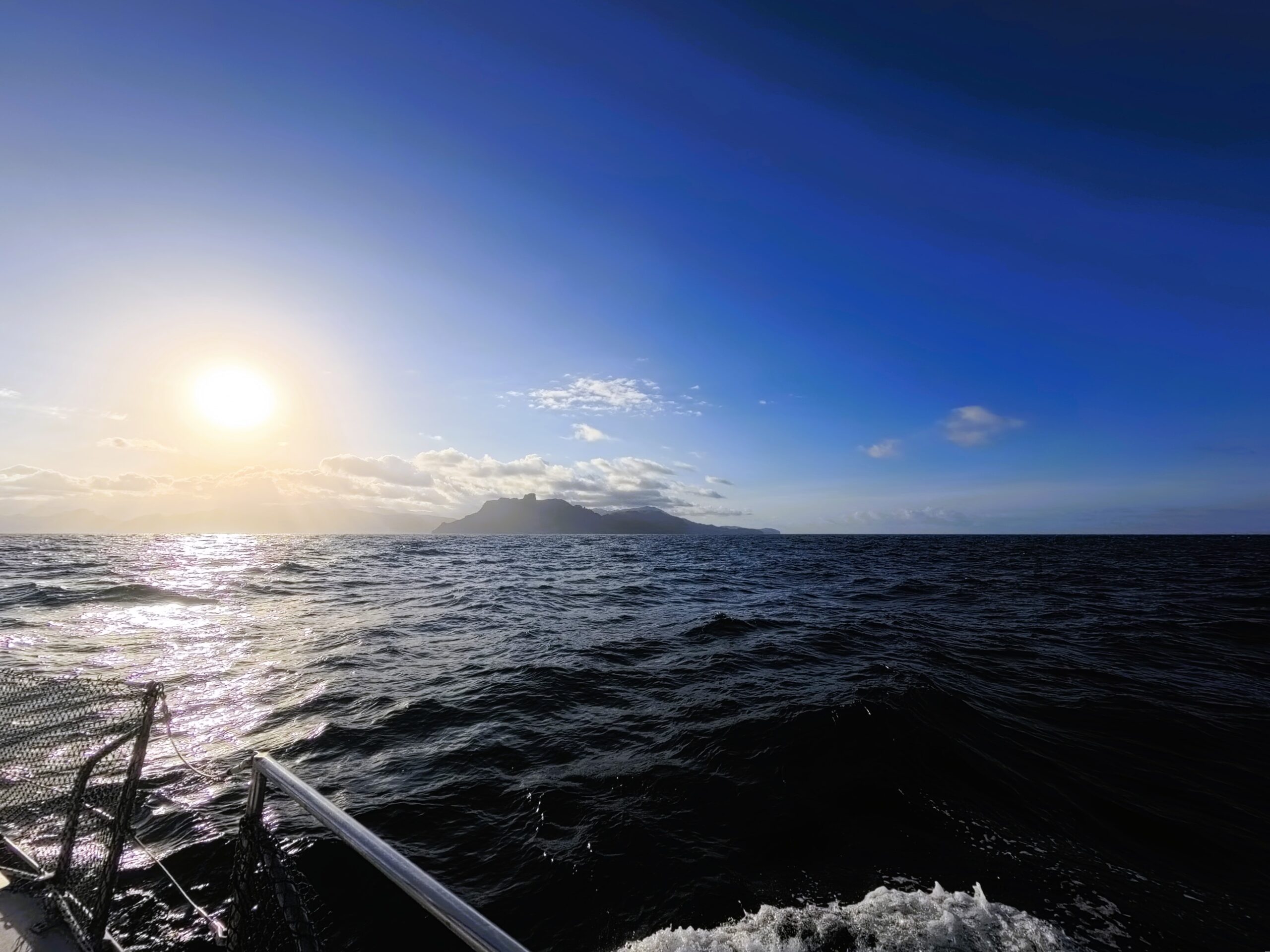
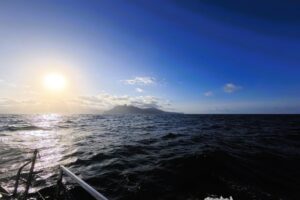
Day 32 – Land Ho! Early in the morning, we spotted Ua-Huka in the distance. We sailed along its southern coast to reach Nuku-Hiva, located about 30 miles to the west. We were hopeful of entering Taiohae Bay during daylight hours. Alas, by 6:30 PM, it was pitch black, and we had to slalom between the multitude of boats already anchored to find a spot. We anchored in a 40-footer, surrounded by boats. I’d say there were at least fifty… tomorrow we’ll go to the harbor master’s office to sort things out and, most importantly, treat ourselves to a meal! I’ll take the time in the coming days to reflect on this trip, which, all things considered, went extremely well.